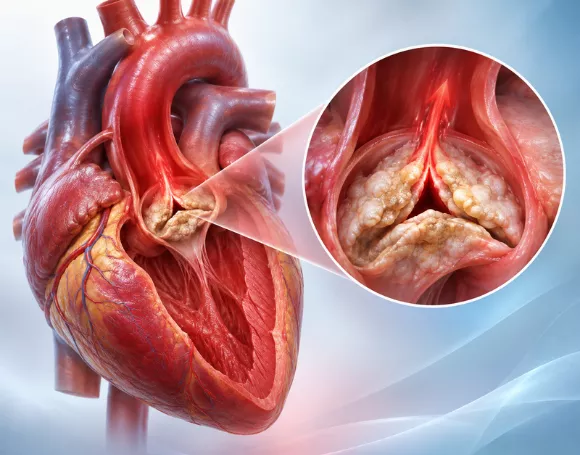
How Can You Recognize Heart Valve Stenosis or Regurgitation? Is Non-Surgical Treatment Possible?
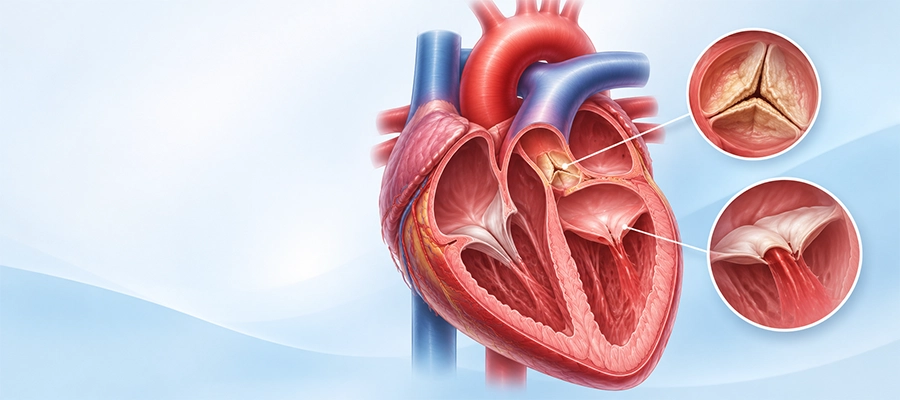
Heart valve stenosis or regurgitation may cause shortness of breath during exertion, unusual fatigue, palpitations, chest discomfort, or swelling in the feet and ankles. However, some patients have no noticeable symptoms for years. Echocardiography (an echocardiogram or echo) is the principal test used to diagnose valve disease. In suitable patients, catheter-based options such as TAVI or transcatheter valve repair may be considered without traditional open-heart surgery.
Heart valve disease does not always require immediate intervention. Treatment depends on the type and severity of valve dysfunction, how well the heart is working, and the patient’s overall condition. Symptoms alone cannot establish whether a valve is narrowed or leaking.
What Is the Difference Between Heart Valve Stenosis and Regurgitation?
Heart valves keep blood moving in the correct direction through the heart. With valve stenosis, a valve cannot open fully, making forward blood flow more difficult. With valve regurgitation (also called valve insufficiency), a valve does not close tightly, allowing some blood to flow backward. Stenosis and regurgitation can occur in the same valve.
Stenosis may force the heart to work harder to move blood through a narrowed opening. Regurgitation can place an additional volume burden on the affected heart chamber. Over time, either problem may affect the heart muscle and circulation, although progression depends on the valve involved and the severity of disease.
| Feature | Heart valve stenosis | Heart valve regurgitation |
| Main problem | Valve does not open fully | Valve does not close tightly |
| Effect on blood flow | Forward blood flow becomes restricted | Some blood flows backward |
| Possible symptoms | Breathlessness on exertion, chest pain, dizziness | Breathlessness, palpitations, fatigue, swelling |
| Main diagnostic test | Doppler echocardiography | Doppler echocardiography |
| Treatment approach | Monitoring, catheter procedure, or surgery when appropriate | Monitoring, transcatheter repair, or surgery when appropriate |
This comparison is a general guide. For example, shortness of breath can occur with both aortic stenosis and mitral regurgitation. Symptoms alone cannot reliably identify which heart valve is affected.
What Are the Early Symptoms of Heart Valve Stenosis and Regurgitation?
One of the earliest clues may be a change in everyday exercise tolerance. Climbing stairs may become more difficult, or you may need to stop more often during a walk that previously felt easy. Because symptoms can worsen gradually, these changes are sometimes overlooked.
Shortness of Breath With Exertion and Unusual Fatigue
When a valve no longer functions properly, the heart may struggle to pump blood efficiently. Shortness of breath can develop while walking, climbing a hill, or using stairs. In more advanced disease, breathlessness may also occur at rest.
A progressive decline in daily activity is particularly important to recognize. However, shortness of breath can also result from lung disorders, anemia, and other cardiac conditions. The underlying cause requires medical assessment rather than assumptions based on one symptom.
Heart Palpitations and an Irregular Heartbeat
Valve abnormalities may enlarge heart chambers and increase the likelihood of certain arrhythmias. Palpitations or an irregular pulse may occur, particularly with mitral valve disease. Nevertheless, not every episode of palpitations is caused by a valve problem.
For more information about recurrent palpitations and their evaluation, see the heart rhythm disorder (arrhythmia) page. Palpitations accompanied by fainting or significant chest pain may require emergency assessment.
Chest Pain, Dizziness, and Fainting
Severe aortic stenosis may cause chest discomfort, dizziness, or fainting during exertion. These symptoms can occur when the heart has difficulty pumping blood through a narrowed aortic valve. New episodes of fainting or chest pain should never be ignored.
Valve disease is not the only possible cause of chest pain. Other conditions, including coronary artery disease, can cause similar symptoms. A cardiologist can distinguish between possible causes through examination and appropriate tests.
Swollen Ankles and Breathlessness at Night
Advanced valve disease may lead to signs of heart failure. These can include ankle swelling, difficulty breathing when lying flat, or waking up at night short of breath. Significant tricuspid regurgitation can also cause leg swelling and abdominal fullness.
These symptoms may also occur with other conditions associated with fluid retention. If swelling and breathlessness develop together, prompt medical evaluation is important.
Which Symptoms Are Associated With Different Heart Valve Disorders?
The heart contains four valves: aortic, mitral, tricuspid, and pulmonary. Each has a different location and function. As a result, narrowing or leakage of one valve may cause a different pattern of symptoms from disease affecting another.
| Valve disorder | Possible signs and symptoms | What clinicians assess |
| Aortic stenosis | Breathlessness on exertion, chest pain, dizziness or fainting | Valve area, flow velocity, pressure gradient, and heart function |
| Aortic regurgitation | Awareness of heartbeat, reduced exercise tolerance, breathlessness | Regurgitation severity, left ventricular size, and function |
| Mitral regurgitation | Breathlessness, fatigue, palpitations | Cause and severity of leakage, cardiac chamber dimensions |
| Mitral stenosis | Exertional breathlessness, palpitations, sometimes coughing up blood | Valve area, pressure gradient, and pulmonary pressure |
| Tricuspid regurgitation | Leg swelling, abdominal fullness, fatigue | Right-sided heart function and severity of leakage |
The symptoms in this table are not sufficient for a diagnosis. Some people with severe valve disease may have few or no noticeable symptoms. Follow-up examinations and imaging findings are therefore essential.
What Causes Heart Valve Disease?
Heart valve narrowing or leakage may be present from birth or develop later in life. Age-related calcium buildup is a major cause of aortic stenosis. Rheumatic heart disease can also cause mitral valve narrowing or regurgitation in some patients.
Mitral valve prolapse, previous infections affecting the heart, and diseases of the heart muscle can also interfere with valve function. Some cases of mitral regurgitation arise from enlargement of the heart chambers rather than a primary defect in the valve itself. Long-standing uncontrolled high blood pressure (hypertension) and other cardiac disorders may contribute to this process.
Identifying the underlying cause is important when selecting treatment. Primary structural valve disease and secondary valve regurgitation caused by impaired heart muscle function may require different approaches.
How Are Heart Valve Stenosis and Regurgitation Diagnosed?
Evaluation starts with a review of symptoms and medical history. The clinician listens to the heart for a murmur, an unusual sound that may suggest abnormal blood flow. However, a murmur does not always indicate severe valve disease, and some patients with valve disease may not have an obvious murmur.
What Can an Echocardiogram (Echo) Show?
Echocardiography is the main imaging method used to assess valve stenosis and regurgitation. Ultrasound images reveal valve movement, the valve opening, the severity of leakage, and how the heart muscle is functioning. Doppler measurements help assess the speed and direction of blood flow across the valves.
An echo report may describe a valve problem as mild, moderate, or severe. This grading is not based on just one measurement. In particular, severe aortic stenosis and significant valve regurgitation require several findings to be interpreted together.
When Are ECG, TEE, CT, and Cardiac MRI Used?
An electrocardiogram (ECG) records the heart’s electrical activity and can identify accompanying rhythm abnormalities. However, an ECG cannot directly show the severity of a narrowed or leaking valve.
When more detailed views are needed, transesophageal echocardiography (TEE), performed using a probe in the esophagus, may be recommended. Computed tomography (CT) is valuable for anatomical measurements before certain catheter-based valve procedures. In selected situations, cardiac magnetic resonance imaging (MRI) helps assess the volume of regurgitation and the size and function of heart chambers. Not every patient needs every test.
When Does Heart Valve Stenosis or Regurgitation Become Dangerous?
The risk associated with heart valve disease is not determined only by how severe symptoms feel. Significant valve dysfunction can cause progressive changes in the heart muscle even when symptoms are limited. Cardiologists assess echocardiographic findings, pumping function, valve anatomy, and the patient’s ability to perform daily activities.
Call emergency services immediately for sudden severe chest pain, major breathing difficulty, fainting, or signs of stroke. In Turkey, the emergency number is 112; elsewhere, use the local emergency number. Facial drooping, difficulty speaking, or weakness on one side of the body requires urgent assessment even if it resolves quickly.
Gradually worsening exercise tolerance, recurrent palpitations, swollen ankles, or newly developed breathlessness also warrant a cardiology appointment. Symptoms that become noticeably worse over a few weeks may require earlier assessment.
Can Heart Valve Stenosis or Regurgitation Be Treated Without Open-Heart Surgery?
Yes. Some heart valve disorders can be treated through a catheter without opening the breastbone in carefully selected patients. However, ‘non-surgical’ does not mean risk-free or completely non-invasive. Suitability depends on the valve involved, the severity of stenosis or regurgitation, and the patient’s anatomy and overall health.
TAVI for Aortic Valve Stenosis
TAVI (transcatheter aortic valve implantation) places a new biological valve using a catheter in selected patients with severe aortic stenosis. The heart is usually accessed through an artery in the groin. It may provide an alternative to surgical aortic valve replacement, but it is not automatically the best choice for everyone.
The choice between TAVI and surgery depends on age, valve anatomy, surgical risk, life expectancy, and possible future valve procedures. For more details about the intervention, read the TAVI (transcatheter aortic valve implantation) page.
Transcatheter Repair for Mitral Valve Regurgitation
Certain forms of severe mitral regurgitation may be treated with transcatheter edge-to-edge repair (TEER). MitraClip and comparable systems bring the mitral valve leaflets closer together to reduce leakage. This is a valve repair procedure, not a replacement with a new valve.
Catheter-based mitral repair is not suitable for every type of leakage. Whether regurgitation is primary or secondary, the valve anatomy, and the patient’s surgical risk all matter. In secondary regurgitation associated with heart failure, appropriate medication and device therapy are often optimized first.
Balloon Procedures for Mitral Valve Stenosis
Some patients with rheumatic mitral stenosis and suitable valve anatomy may be candidates for balloon mitral valvotomy, also called percutaneous mitral commissurotomy. Eligibility depends on factors such as valve calcification, the degree of accompanying regurgitation, and other clinical findings.
For aortic valve regurgitation, catheter-based options are generally more limited than for aortic stenosis. They may be considered in selected patients who are not suitable for surgery. Further information about the different approaches is available on the non-surgical heart valve treatment page.
Catheter-Based Treatment or Surgery: How Is the Decision Made?
Treatment is not selected solely on the basis of age or a wish to avoid surgery. A multidisciplinary heart team considers the type and severity of valve disease, imaging results, coexisting illnesses, and both short- and long-term outcomes of each procedure.
For example, TAVI may be appropriate for some patients with severe aortic stenosis, while surgical valve replacement may offer advantages in certain younger, lower-risk individuals. In severe primary mitral regurgitation, surgery may be preferred if a durable repair is feasible. These distinctions are also emphasized in the 2025 ESC/EACTS guidelines for valvular heart disease.
Many mild or moderate valve abnormalities can be managed with regular monitoring rather than immediate intervention. Medicines may relieve symptoms or manage associated conditions, but they generally cannot reverse a structurally narrowed valve.
Why Is Regular Follow-Up Important for Heart Valve Disease?
The rate of progression varies between patients. Regular cardiology reviews monitor valve function, heart chamber size, and pumping performance. Follow-up intervals are tailored to the severity of the condition and previous test results.
Patients should also pay attention to changes in everyday activities. If breathlessness develops during shorter walks, or new palpitations or leg swelling appear, they should contact their clinician rather than simply wait for the next scheduled visit. Missing follow-up echocardiograms can delay timely treatment.
Frequently Asked Questions
Can an Echocardiogram Detect a Leaking Heart Valve?
Yes. Echocardiography is the primary test for identifying and grading heart valve regurgitation. Doppler ultrasound measures blood flowing backward through the valve. Additional tests such as TEE or cardiac MRI may sometimes be needed.
What Is the First Sign of Heart Valve Stenosis?
There is no single early sign that applies to everyone. Shortness of breath on exertion, unusual fatigue, or difficulty with everyday activities may be early clues. Severe aortic stenosis can also cause chest pain or fainting.
Can a Leaking Heart Valve Cause Palpitations?
Yes. Some forms of valve regurgitation can be associated with palpitations or arrhythmias. However, palpitations alone do not confirm a leaking valve. An ECG, Holter monitor, and echocardiogram may be used when appropriate.
Is Mild Heart Valve Regurgitation Dangerous?
Mild valve regurgitation often requires monitoring rather than an immediate procedure. Its cause, the valve affected, and the heart’s function still matter. A clinician should determine the appropriate follow-up schedule and whether treatment is needed.
Can Medication Open a Narrowed Heart Valve?
No. Medication cannot usually reverse structural heart valve stenosis. It can, however, help manage problems such as breathlessness, fluid retention, or associated arrhythmias. Severe cases may require a valve intervention when clinically appropriate.
Is Non-Surgical Heart Valve Treatment Suitable for Everyone?
No. TAVI, transcatheter mitral repair, and balloon valve procedures are designed for different valve disorders. Suitability depends on anatomy, disease severity, overall health, and procedural risk.
When Should You See a Cardiologist About Valve Stenosis or Regurgitation?
A cardiology review is recommended for new breathlessness with exertion, recurrent palpitations, swollen ankles, or declining exercise capacity. Severe chest pain, serious breathing difficulty, or fainting requires emergency assessment.