
What is TAVI (Transcatheter Aortic Valve Implantation)?
TAVI is a minimally invasive procedure that replaces the aortic valve using a catheter-based technique without open-heart surgery. Until recent years, aortic valve replacement was performed only through open surgery. Today, with TAVI, the valve can be replaced without opening the chest.
What is aortic stenosis?
Aortic stenosis is the narrowing or dysfunction of the valve located between the left ventricle, which pumps blood to the body, and the aorta. TAVI is a non-surgical treatment option for patients with severe aortic valve stenosis. It is especially suitable for patients who are not candidates for surgery or who are considered high risk. With recent technological advances, TAVI is also being performed in selected patients with intermediate and low surgical risk.
How is the TAVI procedure performed?
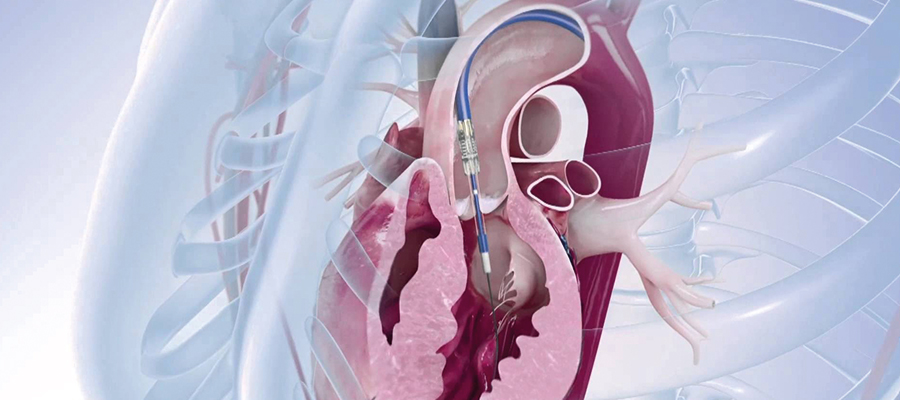
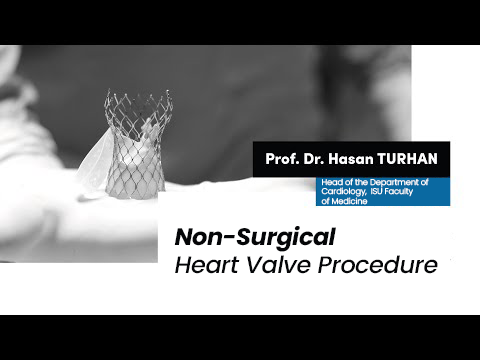
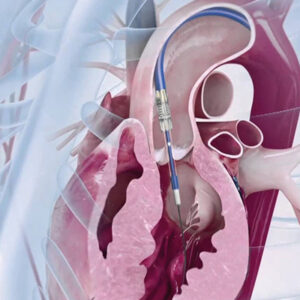
TAVI is performed in a catheterization laboratory under sterile conditions. The patient fasts for at least six hours before the procedure. Mild sedation is administered by anesthesia. In most cases, access is obtained through the femoral artery in the groin. A biological valve, usually made from bovine or porcine tissue, is mounted on a metal stent. The valve is delivered to the diseased aortic valve and expanded either with a balloon or by self-expansion. Once deployed, the new valve pushes the old valve aside and begins functioning immediately.
Is TAVI a permanent alternative to surgery?
TAVI is a permanent alternative to open-heart valve replacement. It is not an experimental or temporary treatment. Since its first use in 2002, it has been successfully performed in more than 500,000 patients across over 70 countries.
What are the risks of TAVI?
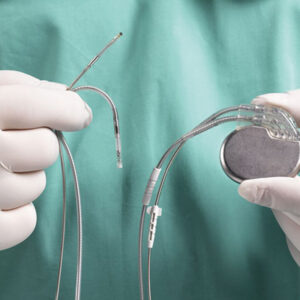
- Due to proximity to the heart’s electrical system, a permanent pacemaker may be required in approximately 7% of patients.
- Mild leakage around the new valve may occur due to calcification.
- The contrast dye used during the procedure may affect kidney function, especially in patients with pre-existing kidney disease.
- Serious complications such as heart attack, stroke, severe bleeding, or death are rare, occurring in about 2% of cases, and are generally less frequent compared to surgery.
Is valve replacement necessary?
In advanced aortic stenosis with symptoms such as shortness of breath, chest pain, or fainting, valve replacement is essential. Medication can only relieve symptoms temporarily. Without valve replacement, the risk of death increases significantly over time.
Is the heart stopped during TAVI?
Unlike open surgery, the heart is not stopped during TAVI, and the patient is not connected to a heart-lung machine. Therefore, major complications are less common.
How long does the TAVI procedure take?
The duration depends on the patient’s anatomy and clinical condition. An uncomplicated TAVI procedure typically takes about one hour.
Is TAVI painful?
TAVI is usually performed under sedation, and the patient does not feel pain during the procedure. General anesthesia is rarely required.
How long does the TAVI valve last?
The valve used in TAVI is made from the same biological material as surgical bioprosthetic valves. Therefore, its durability is considered similar to surgically implanted biological valves.
Can TAVI be repeated?
If the implanted valve loses function over time, a repeat TAVI procedure may be performed.
Can TAVI be performed after previous surgical valve replacement?
If the previous valve is a biological prosthesis, TAVI can be performed. However, if the previous valve is mechanical, TAVI is not suitable.
Why Patients Consider TAVI In Turkey?
Many patients consider TAVI in Turkey because experienced interventional cardiology and cardiovascular surgery teams often work together in multidisciplinary heart valve programs. A heart team approach is important in valve disease because treatment decisions should consider procedural risk, long-term outcomes, valve durability, and the patient’s life circumstances. Modern Turkish hospitals frequently provide the advanced imaging needed for safe planning, such as echocardiography and cardiac CT for valve sizing.
International patient coordination can also make the process easier. Medical travel programs may help schedule diagnostics, consultations, and the procedure in a structured timeline. That convenience can be valuable, but clinical quality should remain the priority. A trustworthy provider will confirm that TAVI is appropriate, explain alternatives, discuss expected benefits and risks, and ensure you have a follow-up strategy when you return home.
Who Is A Candidate For TAVI?
TAVI is most commonly used for patients with severe symptomatic aortic stenosis. Candidate selection has expanded over the years, and many programs now evaluate a wide range of patients. Still, not everyone is suitable. The decision depends on valve anatomy, calcification patterns, access vessel size and health, the presence of other valve problems, and the patient’s overall medical condition.
Patients with high or intermediate surgical risk may be strong candidates for TAVI, and in some situations lower-risk patients may also be considered depending on guideline-based assessment and clinical judgment. Some patients may be better served by surgical valve replacement, particularly if they need other heart surgeries at the same time, such as bypass surgery or complex repair of other valves.
Symptoms Of Severe Aortic Stenosis To Take Seriously
Severe aortic stenosis can remain silent for a long time, which is one reason it can be dangerous. When symptoms appear, they often include shortness of breath with exertion, reduced exercise tolerance, chest tightness, dizziness, and fainting. Some patients notice swelling in the legs, waking up short of breath, or a general decline in stamina.
These symptoms can overlap with other conditions, such as lung disease or anemia, so diagnostic testing is essential. If symptoms progress quickly, urgent evaluation is important. For patients traveling for TAVI, it is wise to share recent symptom changes and any hospitalizations with the team in advance so they can plan safely.
How TAVI Evaluation Works In Turkey?
TAVI evaluation is detailed because precision matters. The process usually includes a clinical assessment, blood tests, electrocardiogram, and echocardiography to confirm valve severity and heart function. Many patients undergo cardiac CT, which helps measure the valve annulus, evaluate the aorta, and assess blood vessels that will be used for access. Coronary artery assessment is also common because coronary artery disease may need treatment before or during valve intervention.
Risk assessment often includes evaluation of kidney function, lung disease, frailty, bleeding risk, and prior surgeries. The heart team reviews all findings and recommends a treatment approach. This stage is where you should receive clear explanations about why TAVI is recommended, what valve type may be used, and what the expected recovery timeline looks like.
What Happens During A TAVI Procedure?
TAVI is usually performed in a catheterization laboratory or hybrid operating room. The procedure is commonly done under sedation or general anesthesia depending on patient status and hospital protocol. The most frequent access route is transfemoral, meaning through an artery in the groin. A catheter carrying the new valve is advanced to the heart and positioned inside the diseased aortic valve.
Once the valve is correctly placed, it is expanded to anchor in position and begin functioning immediately. The team confirms placement and performance with imaging. Afterward, the access site is closed and the patient is monitored closely. Many patients spend time in a monitored unit, and the overall hospital stay depends on recovery speed, rhythm monitoring, kidney function, and the presence of complications.
Types Of Valves Used In TAVI
TAVI valves come in different designs and sizes, and the choice depends on anatomy and clinical goals. Some valves are balloon-expandable, while others are self-expanding. Each design has advantages in certain anatomies. Valve sizing is a critical step because a valve that is too small or too large can increase the risk of leakage around the valve or other complications.
Patients considering TAVI in Turkey should ask which valve system is proposed, why it suits their anatomy, and what follow-up expectations are for valve performance over time. The hospital should provide written documentation of valve type and size for future reference.
Benefits Of TAVI Compared With Open Surgery
For many suitable patients, TAVI offers a less invasive alternative to open surgical valve replacement. This can mean a shorter hospital stay, less pain, and faster return to daily activities. Patients who are older, frail, or have multiple medical conditions often benefit from avoiding a sternotomy and cardiopulmonary bypass when it is safe to do so.
TAVI can also deliver dramatic symptom improvement. Many patients report breathing easier, walking longer distances, and regaining confidence in daily movement. The degree of improvement depends on overall heart function, lung health, and the presence of other cardiovascular conditions. A realistic discussion with the heart team helps clarify expected outcomes for your situation.
Risks And Possible Complications To Discuss
TAVI is a major cardiac intervention and carries risks, even though it is minimally invasive. Potential complications include bleeding or vascular injury at the access site, stroke, kidney injury, valve leakage around the valve, and rhythm problems. Some patients may need a pacemaker after TAVI if the heart’s conduction system is affected.
Risk varies by patient. Age, calcification patterns, vessel health, existing rhythm disorders, kidney function, and overall frailty all influence the risk profile. A high-quality provider will explain these risks, describe how they reduce them through planning and technique, and outline what monitoring will occur after the procedure.
Recovery After TAVI In Turkey
Recovery after TAVI is often quicker than after open surgery, but it still requires careful follow-up. Patients are usually encouraged to mobilize early when safe. Medication plans often include antiplatelet therapy or anticoagulation depending on individual risk factors and other conditions such as atrial fibrillation. Blood pressure management and heart failure medication adjustments may also be part of discharge planning.
Questions To Ask Before Booking TAVI In Turkey
Asking clear questions helps you understand your plan and compare centers. Ask whether your aortic stenosis is severe and symptomatic, and whether TAVI is recommended over surgery in your case. Ask what access route is planned and why. Ask which valve type is proposed and how valve sizing will be performed. Ask about the chance of needing a pacemaker, how stroke risk is minimized, and how kidney function will be protected.
Also ask about hospitalization length, the timeline for returning home, and the follow-up schedule for echocardiography and clinical checks. Finally, ask how the team will coordinate with your local cardiologist, including what documents you will receive at discharge.

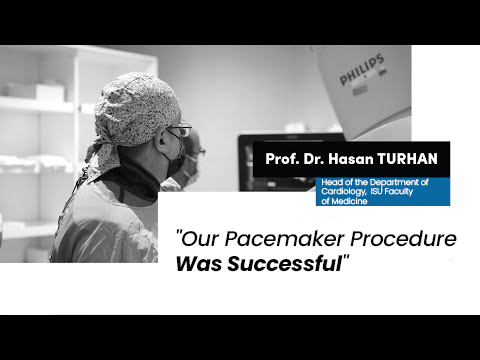
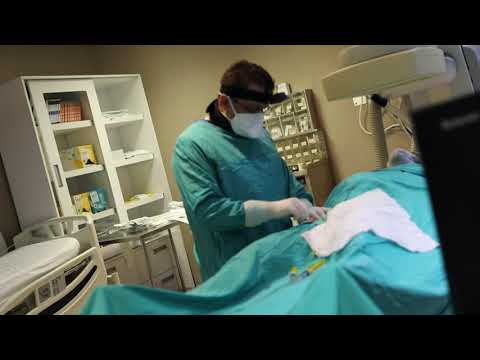
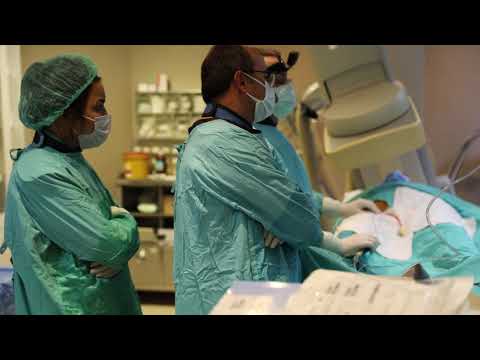
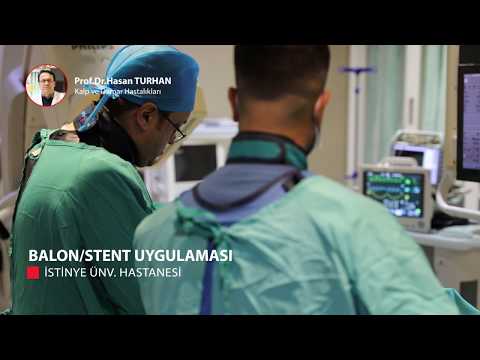




I would like to express my sincere thanks and appreciation to Prof. Dr. Hasan Turhan and the entire medical team who performed my EPS ablation procedure. 🙏🏻
Prof. Dr. Hasan Turhan is one of the leading physicians in his field. He had been closely following my mother’s condition for a long time. When surgery became necessary for her full recovery, the procedure was performed successfully.After the operation, my mother experienced pain, and he stayed by her side from midnight until 4:00 a.m. without leaving even for a moment. I told him personally that even a close relative could not have shown more care.We are deeply grateful for his patience, precision, and the way he explains everything clearly and simply. He answered all our questions in a direct and understandable manner.Our sincere thanks to Prof. Dr. Hasan Turhan, and especially to Ms. Hamide, Ms. Fatma, and all the doctors, nurses, and healthcare staff in the service.
We visited Prof. Dr. Hasan Turhan due to my spouse’s heart rhythm disorder. Although other hospitals recommended ablation, we were afraid and postponed the procedure. We spent weeks in different emergency departments across Istanbul.Meeting Prof. Dr. Hasan Turhan was truly a turning point for us. He is highly experienced, confident, and reassuring in his field. At first, we hesitated again and preferred to try medication. However, we eventually underwent the ablation procedure.After the treatment, we realized we should have done it much earlier. The procedure was very successful, and we returned to our normal life. If you have any heart-related concerns, Prof. Dr. Hasan Turhan is truly an expert in his field.Thank you for everything.
Prof. Dr. Hasan Turhan is a rare physician distinguished by his medical expertise, professional discipline, and strong human values.When I consulted him for my heart rhythm disorder, the knowledge, skill, and mastery he demonstrated during my treatment were truly beyond words.I am sincerely grateful to my esteemed colleague, thanks to whom I have regained my health. Wishing him continued success and good health.Dr. Numan Bakırcı