How Can You Tell If You Have Blocked Arteries? Early Signs and Diagnostic Tests
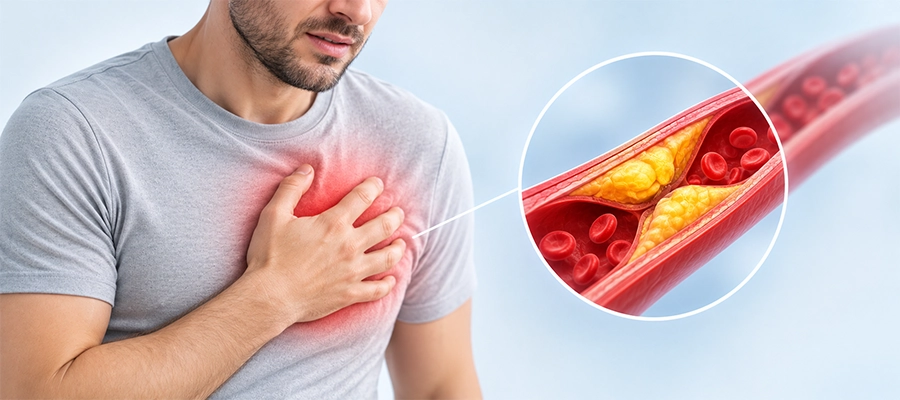
Blocked arteries may cause symptoms such as chest pressure, shortness of breath during physical activity, leg pain while walking, and unusual fatigue. However, these symptoms alone cannot confirm an arterial blockage. Diagnosis requires an assessment by a healthcare professional and, when appropriate, specific diagnostic tests.
Arterial disease can sometimes develop for years without causing noticeable symptoms. This makes timely assessment particularly important for people with diabetes, high blood pressure, or high cholesterol. When symptoms occur, what triggers them and whether they worsen with activity can help guide the investigation.
What Are the Early Signs of Blocked Arteries?
The early signs of blocked arteries depend on which part of the body has reduced blood flow. Narrowing in the arteries supplying the heart can cause different symptoms from circulation problems affecting the legs.
Symptoms that appear during physical activity and improve with rest deserve attention. Nevertheless, arterial blockage does not always cause pain. The absence of symptoms does not necessarily mean that the arteries are free of disease.
Chest Pressure or Tightness During Physical Activity
Narrowing of the coronary arteries may reduce the amount of oxygen-rich blood reaching the heart muscle. As a result, a person may experience pressure, tightness, or a burning sensation in the chest while walking, climbing stairs, or exercising.
Discomfort may also spread to the arm, back, neck, or jaw. Chest symptoms that improve with rest may indicate a need to investigate coronary artery disease. New, severe, or persistent chest pain, particularly pain occurring at rest, requires urgent medical assessment.
For more information about the causes and clinical features of narrowing in the arteries supplying the heart, see the coronary artery disease page.
Leg Pain That Starts While Walking
Reduced blood flow in the leg arteries can prevent the muscles from receiving enough oxygen, especially during walking. This may cause pain, cramping, or a sensation of heaviness in the calves, thighs, or buttocks.
A typical feature of circulation-related leg pain is that it begins with activity and improves after stopping to rest. However, muscle, joint, and nerve disorders can cause similar symptoms. A physical examination and appropriate vascular tests are needed to identify the underlying cause.
Shortness of Breath and Unusual Fatigue
Becoming short of breath or unusually tired during everyday activities that were previously easy may warrant an assessment for heart disease.
Some people with coronary artery disease experience breathlessness during exertion rather than typical chest pain. This may be particularly relevant in older adults and people with diabetes. However, shortness of breath can also result from other conditions, including lung disease and anemia.
Where in the Body Can Blocked Arteries Cause Symptoms?
Arterial blockage is not limited to the coronary arteries. Arteries supplying the brain, legs, and other organs may also be affected. The location of symptoms can offer useful clues about which part of the circulation needs to be assessed.
| Affected artery or region | Possible symptoms |
| Coronary arteries (heart) | Chest pressure, breathlessness with exertion, unusual fatigue |
| Leg arteries | Pain when walking, cold feet, slow-healing wounds |
| Arteries supplying the brain | Sudden speech difficulties, weakness on one side, sudden vision loss |
| Arm arteries | Pain with activity, weakness, coldness |
| Renal arteries (kidneys) | Difficult-to-control high blood pressure or impaired kidney function in some patients |
These symptoms are not specific to blocked arteries. For example, arm numbness may be caused by nerve compression, while leg pain may arise from spinal conditions. Their onset, location, duration, and pattern of recurrence are therefore important.
Repeated leg pain during walking may justify assessment for peripheral artery disease (PAD). Sudden neurological symptoms require emergency evaluation because they may indicate a stroke.
Can Arteries Become Blocked Without Causing Symptoms?
Yes. Some people develop arterial narrowing without obvious symptoms, particularly when the disease progresses gradually. The body can sometimes adapt to reduced blood flow for a period of time.
A person’s activity level can also affect whether symptoms are noticed. Someone who only walks short distances, for example, may never reach the level of exertion that would otherwise trigger chest discomfort or leg pain.
In people with diabetes, the heart muscle may sometimes receive insufficient blood without causing noticeable chest pain. This is known as silent ischemia. It is an important consideration in cardiovascular assessment. However, this does not mean that everyone without symptoms needs extensive vascular imaging. Testing should be based on individual risk and clinical findings.
Which Symptoms Require Emergency Medical Attention?
Certain sudden or rapidly worsening symptoms can indicate a serious problem affecting blood circulation. Call your local emergency number (112 in Türkiye) if any of the following occur:
- New, severe chest pain or chest pain that does not improve with rest
- Chest discomfort accompanied by marked shortness of breath, cold sweating, or fainting
- Sudden facial drooping, speech difficulties, or weakness on one side of the body
- Sudden loss of vision in one eye or a sudden, severe disturbance of balance
- Sudden severe pain, coldness, paleness, or loss of movement in an arm or leg
These warning signs may be associated with a heart attack, stroke, or acute arterial occlusion. Stroke-like symptoms require emergency assessment even if they disappear after a short time.
How Are Blocked Arteries Diagnosed?
The diagnosis of arterial blockage is based on medical history, physical examination, and appropriate testing. The most useful tests depend on the suspected location of the blockage and the patient’s clinical condition.
During the initial assessment, the clinician considers how long symptoms have been present, whether they are related to physical activity, and whether other medical conditions may be contributing. Further examination of the heart or peripheral arteries is then planned when indicated.
Electrocardiogram (ECG or EKG)
An electrocardiogram is a quick, painless test that records the heart’s electrical activity. It may provide information about heart rhythm, certain signs of previous heart muscle damage, and some patterns associated with reduced blood supply.
A normal ECG does not prove that the coronary arteries are free of narrowing. Further tests may be required when suspicion of coronary artery disease remains.
Exercise Stress Testing and Stress Imaging
An exercise stress test evaluates how the heart responds to physical activity. Symptoms, heart rhythm, and ECG changes can be monitored while the heart’s demand for oxygen increases.
Stress echocardiography or myocardial perfusion imaging may be preferred for certain patients. These tests help assess whether the heart muscle is receiving an adequate blood supply during stress.
The choice of test depends on factors such as age, symptoms, baseline ECG findings, and the estimated likelihood of coronary artery disease.
Doppler Ultrasound and the Ankle-Brachial Index
Doppler ultrasound uses sound waves to assess blood flow through vessels. It is particularly useful when examining arteries in the legs and neck.
For suspected leg artery disease, clinicians may also measure the ankle-brachial index (ABI), which compares blood pressure at the ankle with blood pressure in the arm. The result can help assess arterial circulation in the legs.
CT Angiography
Computed tomography angiography (CT angiography or CTA) uses CT scanning and contrast material to produce detailed images of blood vessels. Coronary CT angiography can show the anatomy of the heart’s arteries and possible narrowing.
It may be useful for evaluating coronary artery disease in selected patients, but it is not necessary for everyone. Kidney function, contrast-related considerations, and radiation exposure are among the factors reviewed when selecting a test.
Coronary Angiography
Coronary angiography is an invasive diagnostic procedure that uses a catheter to visualize the arteries supplying the heart. It may be particularly important when significant coronary narrowing is suspected, when other tests indicate high risk, or when an acute coronary syndrome is present.
The procedure helps identify where narrowing occurs and assess the anatomy of the arteries. In suitable cases, an interventional treatment may be carried out during the same session.
Learn more about when the procedure is recommended and how it is performed on the cardiac angiography and transradial angiography page.
What Increases the Risk of Blocked Arteries?
One of the most common underlying causes of arterial blockage is atherosclerosis. This process involves the buildup of plaque containing cholesterol and other substances in the artery wall. Over time, plaque can narrow the space through which blood flows.
Smoking, diabetes, high blood pressure, elevated LDL cholesterol, and a family history of premature cardiovascular disease are important risk factors. Older age, physical inactivity, and obesity may also increase cardiovascular risk.
Having several risk factors can increase the likelihood of developing arterial disease. Assessment should therefore consider not only current symptoms but also a person’s overall cardiovascular risk profile.
What Happens If an Arterial Blockage Is Found?
When an arterial blockage is identified, treatment depends on where the narrowing is located, the patient’s symptoms, and how much the reduced blood flow affects health. Not every arterial narrowing requires a stent or surgery.
For some patients, medication, smoking cessation, and control of risk factors are central to treatment. In other cases, balloon angioplasty, stent placement, or surgery may be considered. In coronary artery disease, decisions about intervention are not based on the percentage of narrowing alone.
The treatment for arterial blockage page explains the available management options and when they may be used. Catheter-based options for suitable patients are also covered on the non-surgical vessel opening treatment page.
When Should You See a Cardiologist About Possible Blocked Arteries?
People who repeatedly experience chest pressure with exertion, unexplained breathlessness, or a noticeable decline in their ability to carry out everyday activities should seek medical assessment. New or progressively worsening symptoms should not be ignored.
Regular follow-up is also important when risk factors such as diabetes, hypertension, and high cholesterol occur together. This does not mean that every person without symptoms needs the same screening tests.
Early assessment can help identify possible arterial disease and guide preventive care. Sudden or severe symptoms, however, require emergency medical attention rather than waiting for a routine cardiology appointment.
Frequently Asked Questions
Can You Tell If Your Arteries Are Blocked at Home?
You cannot reliably diagnose blocked arteries at home. Chest pressure, leg pain when walking, or shortness of breath during exertion may raise concern, but a medical assessment and appropriate tests are needed to establish the cause.
What Is the First Sign of a Blocked Artery?
There is no single first sign that applies to everyone. Narrowed coronary arteries may cause chest discomfort during activity, while leg artery disease may cause pain when walking. Some people have no noticeable symptoms.
Can You Have Blocked Arteries with a Normal ECG?
Yes. Coronary artery disease can be present even when an ECG is normal. An ECG does not directly show narrowing inside the arteries, so additional testing may be needed when clinically indicated.
Which Test Is Best for Detecting Blocked Arteries?
No single test is best for every suspected blockage. ABI measurement and Doppler ultrasound may be used for leg artery disease, while coronary CT angiography or other tests may be appropriate for suspected heart artery disease. A clinician selects testing based on the patient’s condition.
Can Young Adults Have Blocked Arteries?
Yes. Arterial disease can also develop in younger adults. Familial high cholesterol, smoking, diabetes, and other risk factors may contribute to earlier development of the condition.
Does Everyone with a Suspected Blocked Artery Need Angiography?
No. Conventional invasive coronary angiography is not necessary for everyone with suspected arterial disease. Symptoms, individual risk, and the findings of other tests help determine whether it is needed.